A Winter Road Trip Checklist for Mountain Passes: Tires, Chains, and Emergency Gear
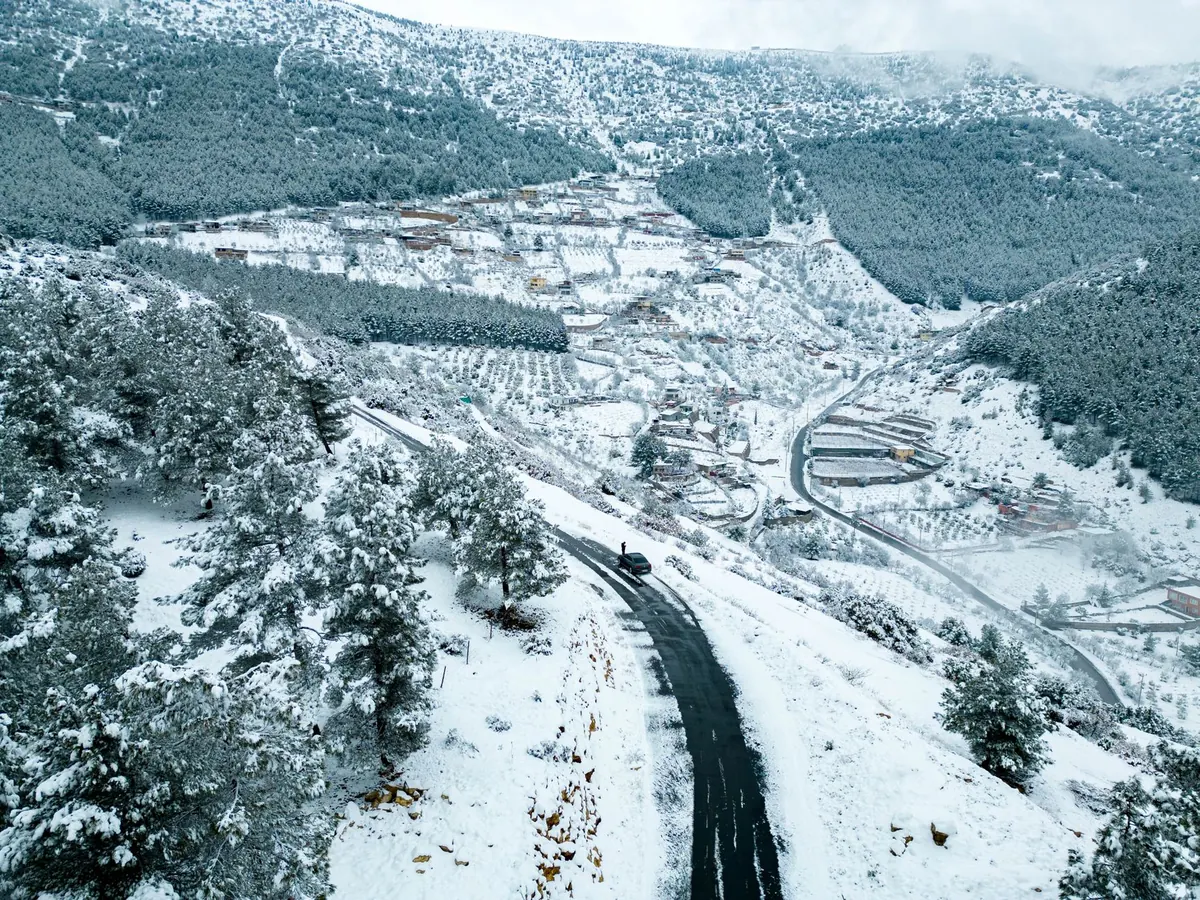
There is a moment on every winter pass where the road stops being scenery and becomes a decision. Maybe it's the sign that says chains obligatory in three languages, or the first patch of hard-packed snow where the tire noise goes soft. The drivers who handle that moment well aren't braver or better. They simply did their homework in a warm garage the night before, and the things they needed were already in the car. This checklist is that homework, laid out in the order you'll actually use it.
Check the Weather Like You Mean It
A general forecast for the nearest town tells you almost nothing about the pass. Weather stacks up differently at altitude: a valley drizzle becomes wet snow at 1,800 metres, and wind can turn a ploughed road into a drift in under an hour.
So look at pass-specific sources. Road authority websites, local webcams aimed at the summit and at both approaches, and the avalanche or snow report for the region are far more useful than a phone's default weather app. Check three times: the evening before, the morning you leave, and again in the last town before the climb. That third check is the one people skip, and it's the one that matters most.
Remember that many high passes shut entirely for the season. The Stelvio's Italian side typically closes from late autumn to late spring, the Grossglockner is closed to traffic in winter, and dozens of smaller cols follow their own calendar. A closed pass doesn't have to ruin a trip, but discovering it at the barrier at dusk will.
Tires Decide More Than You Do
Everything else on this list is a backup. Tires are the only part of the car actually touching the road, and on a cold, wet, salt-covered surface the difference between a proper winter tire and a tired all-season is not subtle.
Look for the three-peak mountain snowflake marking, which indicates a tire tested for severe snow conditions. The older M+S marking is a weaker standard and appears on plenty of tires that struggle on ice. Tread depth matters too: for winter rubber, treat around 4 mm as a working minimum, and consider replacing before you get there rather than after a slide.
Check pressures when the tires are cold, and remember that pressure falls as temperature drops, roughly 0.1 bar for every 10°C. A car that was perfectly set up in a mild valley can arrive at altitude noticeably soft. Also confirm your spare or repair kit is present and usable, because a puncture on a pass shoulder in the cold is a poor place to discover an empty foam canister.
Winter tire and chain obligations vary by country and sometimes by region, and they change. In Italy, winter equipment is required on designated roads for a defined winter period; Austria and Switzerland have their own rules and their own signage. Local signs override anything you read online, including this. If you're unsure, ask at a tire shop near home or check the national road authority's site before booking.
Chains: Know the Rules Before You Need Them
Chains are the part of winter driving that generates the most optimism and the most roadside misery. Read the rules for each country you'll cross, because they genuinely differ: some places accept chains as an alternative to winter tires, others require winter tires as the baseline and treat chains as an extra for extreme sections, and a few prohibit them on clear roads to protect the surface.
Practical points that save time in the cold:
- Check your manual first. Some cars, particularly with certain wheel and tire sizes, don't have clearance for chains. The owner's handbook will say so.
- Buy for your exact tire size and check the fit at home, on dry ground, in daylight, with gloves on. Twenty minutes in your driveway beats an hour on a dark shoulder.
- Fit them to the driven wheels and tension them as the maker instructs, then stop after a short distance to re-tension.
- Keep speed low. Most chain manufacturers cap it around 50 km/h, often less, and driving far on bare asphalt wears them fast.
- Textile alternatives are not a legal substitute where chains are mandated, even though they're easier to fit. Carry them as a bonus, not a loophole.
Pack a kneeling mat or a piece of cardboard, a headlamp, and waterproof gloves. You'll be lying in slush at some point, and dry knees make the whole job less grim.
The Boot Kit That Earns Its Space
You don't need an expedition, but you do need enough to sit out a two-hour closure comfortably or dig yourself out of a ploughed-in lay-by. This fits in a single crate:
- A compact shovel, ideally a sturdy snow shovel rather than a toy
- A tow strap and jump leads, or a charged jump pack
- Headlamp plus a spare torch and batteries
- Warning triangle and one high-visibility vest per occupant — legally required in several European countries
- Ice scraper, de-icer, and a bag of grit, sand, or cat litter for traction
- Blankets, spare hats, gloves, and a full change of warm clothes
- Water and something to eat that survives freezing
- Power bank and cable, plus a paper map of the region
- Basic first aid kit, small tool kit, and a couple of old towels
Keep the vest, torch, and gloves within reach of the driver's seat rather than under three suitcases. If you have to get out on a blind bend, you want the vest on in seconds.
Dress for the Breakdown, Not the Drive
The car has heating; the roadside doesn't. Wear or pack boots you can walk in, a waterproof outer layer, and gloves you can actually work in rather than the leather ones you can't bend your fingers in. If you're travelling with children, add a blanket each and assume a delay of a couple of hours is possible. Filling the tank before the climb, rather than at the summit village, is part of the same logic: options shrink as you go up.
Driving the Pass Itself
Once you're moving, smoothness beats confidence. Use a higher gear than usual to reduce wheelspin, brake gently and early, and let engine braking do the work on descents instead of riding the pedal. Turn off cruise control on anything slippery — it will happily maintain speed on ice, which is the last thing you want. Leave a generous gap, and fit chains in a proper lay-by before the snow gets deep, not after you've stopped halfway up a hairpin.
If you must stop, choose a straight section, keep the wheels pointed down the road, and put a triangle out if visibility is poor. On narrow alpine roads, give descending vehicles room where you can; heavy vehicles and buses need more than you'd think.
The Night-Before Routine
Twenty minutes the evening before does most of the work. Check the forecast and the pass webcams one more time. Verify tire pressures cold. Lay out the crate, confirm the vests and torch are in the cabin, and top up the washer fluid with a proper winter mix. Plan a lower bailout route in case the pass closes, tell someone where you're going and roughly when, and download the map for offline use. Then set the alarm half an hour earlier than you think you need. Mountain roads in winter reward the unhurried, and the view from the top is much better when you're not still tense from the last ten kilometres.
Photo: Ömer Furkan Yakar / Pexels