How to Plan a 7-Day Road Trip Around Tuscany's Back Roads
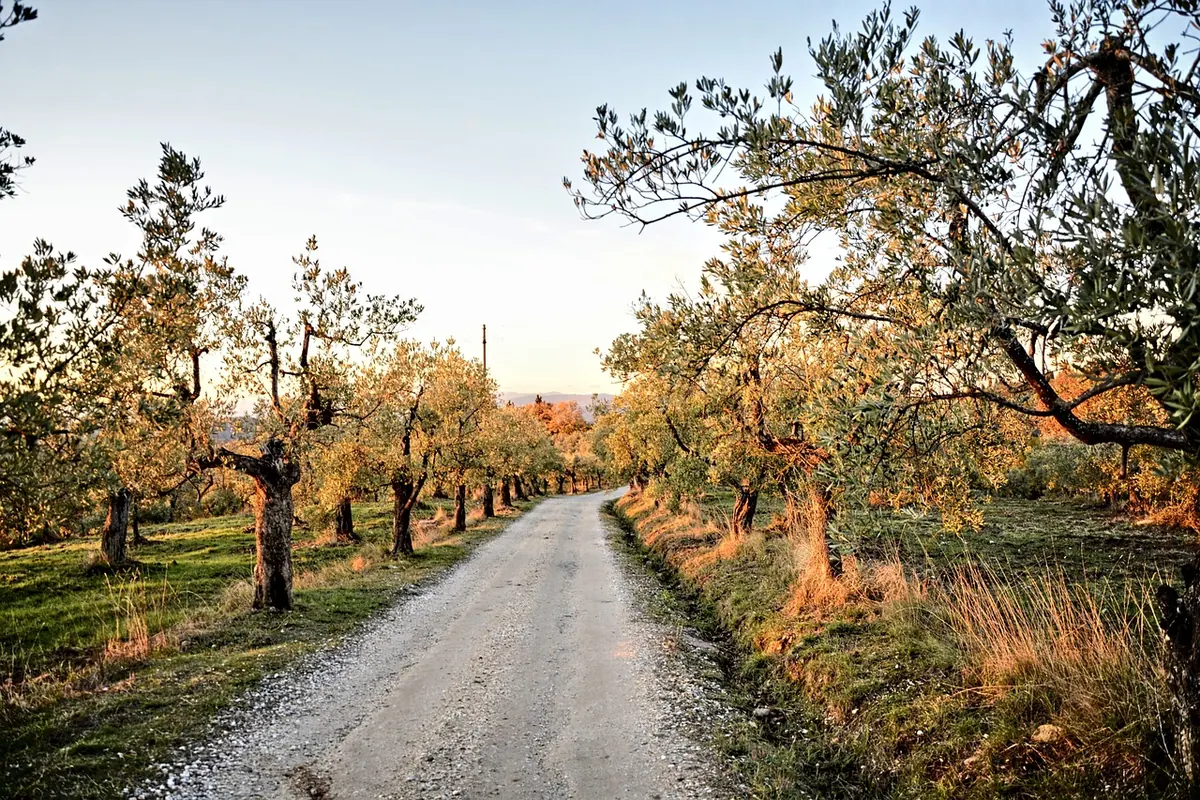
Tuscany rewards slow driving. The famous postcard views are rarely on the autostrada; they are on the two-lane strade provinciali that curl between cypress rows, stone farmhouses and hill towns that look close on the map but take forty minutes to reach. A week is enough to link Chianti, the Val d'Orcia and the Maremma without spending the whole holiday behind the wheel — but only if you plan around realistic distances rather than optimistic ones.
What follows is a workable seven-day framework, built the way an experienced road tripper would build it: three bases, short hops, one long transfer, and every day shaped around where you can actually eat and refuel.
Base Yourself Three Times, Not Seven
The most common planning mistake is booking a different bed for every night. Packing and unpacking eats an hour each morning, and the prettiest roads are usually the ones you rush. Instead, pick three bases and stay two or three nights in each. A natural sequence is a Chianti village, a Val d'Orcia town, and somewhere in the Maremma or the Volterra hills.
Choose bases with easy parking outside the historic centre. Towns like Greve in Chianti, Pienza and Massa Marittima make life simple; sleeping inside a walled town looks romantic until you are reversing a hatchback through a gate at eleven at night. Check that your accommodation has private parking before you book, and confirm it in writing.
Turn Map Times Into Real Times
Mapping apps are honest about distance and dishonest about Tuscany. On paper, Montalcino to Pienza is a short hop. In practice, on the twisting strade provinciali, you will average somewhere between 40 and 55 km/h once you allow for tractors, cyclists, photo stops and the occasional herd of sheep. A good rule: take the app's estimate and add 25 to 30 percent. If it says fifty minutes, plan for seventy.
- Keep daily driving under 130 km on back roads. That is roughly three hours of actual steering, which leaves room for two stops and a long lunch.
- Avoid more than one "transfer day" per trip. The rest should be loops that return to the same bed.
- Drive the scenic stretch in the morning. Light is better, traffic is lighter, and you have slack if something goes wrong.
- Never schedule a tight connection to a flight, a train or a timed museum entry on the same day you cross the region.
The Seven Days, Step by Step
Day 1: Airport to Chianti
Collect the car and leave the city behind immediately — driving in Florence's centre is a headache you do not need, and the restricted zones are camera-enforced. Head south on the SR222 towards Greve in Chianti: about 35 km, allow an hour. Stop for a coffee in Impruneta, stock up on water and snacks, and arrive with daylight left.
Day 2: The Chianti Classico Loop
A loop of roughly 70 km through Greve, Panzano, Radda and Castellina, ending in Siena or back at base. Two and a half hours of driving, spread across a whole day. This is the day for a mid-morning pause at a small cantina and a long lunch; the roads are narrow, hedged and full of blind corners, so keep the pace gentle.
Day 3: Siena to the Val d'Orcia
Transfer day. Take the back route via Buonconvento and Montalcino, with a detour to the abbey of Sant'Antimo, then drop down to San Quirico d'Orcia and Pienza. Around 75 km and two and a half hours of driving. Park outside Pienza's walls — the lots just below the town fill up by mid-morning in summer.
Day 4: Val d'Orcia Back Roads
The best day of the trip, and the shortest in kilometres. Bagno Vignoni, Montepulciano, Trequanda and the Crete Senesi are all within an hour of each other. Drive the SP146 and the smaller strade vicinali, stop whenever the light does something interesting, and be back for dinner. Under 90 km.
Day 5: West to the Maremma
The long transfer: from the Val d'Orcia across to Massa Marittima and the coast, roughly 110 km and three hours with a stop. Break it at Montalcino for coffee and at a village along the way for lunch. Once you are past the hills, the roads open up and the driving gets easier.
Day 6: Maremma and the Colline Metallifere
A relaxed loop through the hills behind the coast — Massa Marittima, Suvereto, Campiglia Marittima — with a beach stop if the weather cooperates. Around 80 km. The roads here are quieter than Chianti's and the driving is more forgiving.
Day 7: North Through Volterra to the Airport
Head north via Volterra and San Gimignano, then join the toll road for the final run. About 100 km and two and a half hours without stops; allow four with them. Leave earlier than feels necessary, especially if you are catching a flight.
Fuel, Parking and Local Rules
Fill up before you leave a town, not when the gauge warns you. Small hill villages often have a single pump, and many stations close for lunch from around 12:30 to 15:00 and all day on Sundays. Motorway service areas and larger towns are the reliable bets. Remember that diesel is gasolio, and that some pumps are self-service (fai da te) while others are attended (servito) and cost more.
Pay attention to the plastic-ticket machines in station forecarts — you often prepay at a kiosk and then use the nozzle. Carry a card that works abroad and a little cash as backup, since a few older pumps accept neither.
On parking: blue lines mean paid, white lines usually free, yellow lines never. Buy the ticket at the machine and display it. And take the restricted-traffic signs seriously — entering a historic centre behind a camera can result in a fine posted to your home address months later, sometimes with a rental company admin fee on top. If you need to drive into a town to reach your hotel, ask the hotel to register your plate in advance.
Build the Day Around Lunch
Meal timing shapes the whole plan. Most trattorias serve lunch from about 12:30 to 14:30 and dinner from 19:30 onwards, and many close one day a week. If you arrive at 15:00 hungry in a village of four hundred people, your options are a bar with a toaster and regret.
Book dinner the night before, and treat lunch as the anchor of the driving day rather than an afterthought.
Practical habits that save the day: keep a picnic kit in the boot for the hours when kitchens are shut, note two or three possible lunch towns each morning, and phone ahead in high season for anywhere you have your heart set on.
The Last Things to Sort Before You Go
Book the car early and specify an automatic if you need one — manuals dominate the rental fleets. Check the excess and consider the damage waiver, photograph the car thoroughly before you drive off, and confirm whether tolls are included or paid by you at the barrier. Download offline maps for the hill country, where signal comes and goes. Keep a paper note of your accommodation addresses in Italian.
Then stop planning. A Tuscan back road rarely rewards a tight schedule; it rewards a driver willing to pull over when a side lane looks interesting. Leave one afternoon blank and see what happens.
Photo: Rangoni-Gianluca / Pixabay